Showing posts with label War. Show all posts

Tuesday, March 29, 2016

Responsibility For Srebrenica Genocide Determined


In July 1995, 8000 Muslim boys and men were killed in a genocide in a tiny town in Bosnia, close to the Serbian border, as part of the Bosnian war. This past week, the Bosnian Serb leader at the time has been found responsible for this crime, and sentenced to 40 year jail.

Driving through this tiny town, and stopping to pay my respects, was a powerful end to my time in Bosnia, as the memory of these tragedies of the war hovered over much of the country, and stories shared about the nation.

Now perhaps, people can start to heal.

There were also many messages pleading to "Never Forget: and "Never Again". But then, the world does not learn. These horrors continue today, in Sudan. In Myanmar. In Syria. In Yemen. In so many places.


Tuesday, November 03, 2015

Wedding Cake-like Ornate Sarajevo Town Hall


One of the most prominent buildings in Old Sarajevo is the Town Hall, on the banks of the Miljacka River. Vijećnica, it's local name, housed the National and University library after World War II.

This building was set ablaze in 1992, in the Balkans War, which not only destroyed the building, but most of the library collection inside.

It was rebuilt, and re-opened in May 2014, and this is it, in all it's Austro-Hungarian architectural glory!

Friday, October 23, 2015

Help Make The World A Little Better: Wrap Of Reads And Links

Since Nauru, I have been actively involved in advocacy in many ways. I am also working within the asylum seeker sector again, which means keeping up to date with policy, current issues and changes, and being aware of stories, conflicts and their impacts.

So I want to start sharing some of that reading, and knowledge. To help you, my readers, be more informed. To be aware of some of the issues, the current situation for the many people war, conflict and persecution impacts, both here in Australia and around the world.

So here is a snapshot of some things you can read, watch and do to stay informed, and help make the world a little better.

Read

The world media has been awash with the situation in Syria, and the impact the ongoing war there has on the flow of people seeking safety in Europe. But can you name the place where more people have been killed this year in conflict?
It's Yemen, where Saudi bombings are happening every day, for the past 200 days.

You can read the 200 Days Of War in Yemen, by UN Dispatch
and
the statistics that Explosions Hurt More Civilians In Yemen Than In Syria This Year.

Yemen is the place of safety and refuge for many asylum seekers and refugees from parts of Africa like Somalia, and so targeting them causes more stress and turmoil for these people.

Watch

Watch this pretty amazing video on Human Rights, by Rights Info:


Write

To your MPs!
Julian Burnside has shared these tips about keeping it short, and with a question, to gain a response and create some dialogue and thought.
Aussies writing to their Labor MP is particularly important between now and November 10, when the party is set to debate it's stance on offshore detention. So let them know what you think!

Join

A Welcome To Australia walk next weekend, October 31, all around Australia. Details of gathering events can be found here, on the Facebook page.

Give

The old bike that you no longer use, and is collecting dust, to the Australian Red Cross bike program - they will tinker with it to run like new, and provide it to an asylum seeker in the community in need. This gift of a bike may help a young person get to school every day, or to let someone ride to a potential new job for a new start at life. This makes a huge positive impact on people's lives!

Donate

Any spare change you can to the fund to support asylum seekers in the Australian community have access to legal assistance for their refugee claim process. Access to funded assistance has been cut, and so organisations who are helping in this most crucial process are doing so on the smell of an oily rag, and donations!

The Asylum Seeker Resource Centre legal support and Refugee and Immigration Legal Centre (RILC) both here in Melbourne, servicing Victoria
and
RACS (Refugees Advice and Casework Service) in Sydney


Know of anything else? Share it in a comment below!

Tuesday, September 01, 2015

A Sarajevo Rose

The scars of a mortar shell filled with red resin, to mark the site where more than one person was killed during the Seige of Sarajevo. Powerful reminders dot the city streets.

This one was in a square, in front of a church. The bombs falling on the city were so many, and so destructive.


Saturday, August 29, 2015

Human Rights And Arts Festival 2015: Melbourne

This year's Human Rights Arts And Film Festival back in May served up many thought-provoking moments, and glimpses into the incredibly tough journeys many of our fellow man, and women, experience around the world.

Wolfskinder is about the forgotten children of World War II. The "Wolf Children" are the German children - orphans or displaced - who are walking, fleeing, and trying to find safety, through the country-side, through forests. In hiding, alone, and scared.
Facing things children should not have to face, and working out through each day how to survive.
It's clear, as the story continues, that other children are the only people that will help these children along the way. Adults either come to shot at the children, or are suspicious of them and wary of sharing any food they may have. The cobbled group of children that the film follows, which is ever changing and circumstances and tragedy hits, carry each other, find and share food for each other, keep watch as the others sleep.
Heartbreaking, and real. A tragedy of war not often focused on.

Breakfast Sessions were a new forum aspect of the Festival this year, and I attended the one on Refugees: An International Perspective. A panel of 4 experts in the area, including Daniel Webb from the Human Rights Law Centre and Rebecca Eckard from the Refugee Council, spoke about the lack of learning Australia takes from reviews of other countries, and of course talked about Australia's current policies of arbitrary, indefinite detention on and offshore.
This was paired with stories and scenarios from across the globe, and how other nations deal with refugees. The humanitarian efforts, and the sheer numbers some small nations are taking in, and providing safety to.
The Rohingya situation at sea at the time was highlighted in many examples, being the most persecuted minority in the world today, and a stunning fact that Australia had not settled any Rohingyan refugees for many, many years, was the stark reality of our current inhumanity in our dealings wit the refugee world issue. In addition to the future refugee crisis of climate change and it's impact on communities
The situation in Nauru was discussed. with the point about their dismantled law, and Australia's role of staying silence in the governance of this island nation, for their own political gains.


Don't Think I've Forgotten: Cambodia's Lost Rock 'n' Roll was an incredible and painful look at the music of pre-Khmer Rouge Cambodia. Vibrant, experimental, blues and jazz influenced rock, music scene, with such interesting characters and impressive instrumentation. So many of these stars were killed during the genocide, and with them, the musical scene that filled the bars and lounges of Phnom Penh. Tragic. A must view for anyone interested in the history of Cambodia, and also of music movements.

Transporting a full cinema of school aged kids for the CineSeeds screening of Bekas, which means 'those without family', to Kurdish Iraq at the time of Saddam Hussein rule. Inspired by a stolen glimpse of American cinema through a window, these boys gather the hope of making it over the far away hill, and to safety and a new life in America, with Superman. Kids doing kid things, having kid dreams and fantasy, as the tragic circumstances of their existence force a harsh reality onto their daily lives.

Lastly, I saw Slums: Cities Of Tomorrow, which also included a really interesting Q and A afterward. This is a documentary about the world's slums, and a look at the industry and the misery, the life and living, of these areas. Communities featured included the places that come to mind, like India and Middle East areas such as Morocco and Turkey. But it also featured the fascinating insight into people in New Jersey and Quebec, and the difficulties of the long-term homeless in Western society.

The Q and A highlighted some interesting reflections around sustainability of living, such as recycling, and living very simply, but also spoke about how the world at present has seemed to lost our way, in a community sense, in our constant strive for materialistic things, for that connectedness to the people around us, our neighbours and direct community, within our living spaces. We live in such a rush, we pass by these opportunities, that this film certainly highlighted as a means of survival for so many people.

Thursday, May 28, 2015

Where The Great War Began....


Looking down the Miljacka River to the point on the opposite bank that played such a significant part in the Great War. Here, at the Latin Bridge was were Franz Ferdinand was assassinated in 1914, which triggered the beginning of World War I.

Sarajevo is full of history, war, sadness, memories, and resilience. So interesting!

Sunday, November 02, 2014

Honiara's Japanese WWII Memorial

Another Pacific island nation to have some significant role in World War II because of it's position in the ocean, and thus, being in the middle of things around the Japanese assault, was the Solomon Islands.

The Japanese War Memorial is up in the hills from Honiara, on Mount Austen, and is tricky to find, but worth the attempt.

When we arrived there, after taking a few wrong turns, we found that it was closed - but managed to catch someone's attention near by, and it was opened for us to go in and have a look.


It's simple, beautiful, and commands such a feeling of peace. No war symbols, no graphic reminders of death and battle. No long list of names.

The plaque on one of the side of the marble structure in the centre speaks of the idea that the upward feature of the standing marble should assist the final journey of the spirits of those lost.

Tuesday, October 21, 2014

Hanging Around - Kids In Honiara


These kids were just hanging in this tree in the afternoon I happened to visit the US War Memorial in Honiara. The memorial has many marble upright slabs, telling tales and displaying the names of those lost in battles that have occurred around Guadalcanal - the main island of the Solomon Islands.

Monday, August 25, 2014

The Dirties and Watchers Of The Sky

My work schedule had me home in Melbourne for just a tiny bit of the Melbourne International Film Festival, which gave me two films to see.

The Dirties was my first film, at Collins Street's Kino. A coming of age teen story about bullying and cinema-obsession. Two lads set out to make a film, telling the story of their dream of revenge on the bullies at school who make their days hell - the "Dirties". Very black, and very funny, with their constant film references.

The bullying intensifies, as does the revenge plot. The cult movie references fly, and then the guns are introduced. I find kids holding guns so abhorrent, so this very real turn was confronting. But the momentum had built, and things get out of hand, almost nonchalantly - but it's just pretend, right? Just a movie? Shocking, and yet almost surreal because of the level of desensitisation we the audience and society has towards violence and film.

My second film was equally as grim in topic and lessons - Watchers Of The Sky is a doco about the genesis of the term "genocide". The story of Polish man Lemkin, and the use of his word in international legal processes - and how often, genocide continues to be committed and ignored, the world over.

Grim and depressing, the truth of the reoccurent nature of such horrors around the world hits hard - but the end note about the basis of the name of the film restores hope, miraculously. I hope that in my travels and my work, I too can be one of the Watchers, to make the world a better place.

Tuesday, April 01, 2014

Resting Place Of Breaker Morant

The story of Breaker Morant is one etched into the Australian folk law, I assume because we all studied it at school, and the name is paired with the notion of "war hero" and a sense of injustice and wrongdoing.

A Lieutenant in the Second Boer War, Morant and colleague Hancock were court martialed and sentenced to death for the summary execution of captured prisoners-of-war - so a convicted war criminal.

But much speculation surrounds the events and evidence of the deaths of the captured prisoners, and I remember clearly the arguments around chain of command and therefore responsibility from our studies of the story at school. Re-reading some of the background for this post, I am now, again, totally confused about the circumstances. But I remember the name as such an important one within the fabric of Australian war history.

Morant was buried with Hancock in Pretoria, where they were both executed just over 100 years ago.

I wouldn't have actually recalled the connection with South Africa and this Aussie war story, but for a little snippet about the gravesite in the Lonely Planet. On a day off before the cricket in February, around the anniversary of their deaths in fact, we made a trip to search out such a unique part of Australian wartime stories.

The graves are in Hero Acre Cemetery, which was not actually labelled as such, and our very patient bongo-driver tried his best to work with our lack of an idea of what we were looking for. When we got to the unmarked cemetery, we all walked around for some time, reaching a point where I was sure some of the group was going to give up on such a hunt, with such flimsy instructions to find what we were looking for.

But then someone spotted the little sign on a path, which pointed us to the right section, and we had found it. It felt pretty significant to reach the resting point of such a famous name, in such a tricky place to find. A very Aussie moment, on another continent, far away.


Wednesday, March 12, 2014

Finding The Scattered Remains of the B-25 Coral Princess On Top Of Nauru


Lying at the top of the island nation of Nauru, among the remaining phosphate pinnacles and between the jungle that has grown in the tropical environment of this Pacific Island, is the wreckage of a World War II bomber plane.

The plane is part of the occupation story of Nauru, when the Japanese had hold of the island in an important strategic location for it's assault on the Pacific. The plane, the US Coral Princess, was on a bombing mission but was hit by Japanese fire in June 1944. Wreckage landed all over the country, but most of it remains where it landed, being up on the highest point of Nauru, near the very anti-aircraft gunner that brought it down. All 6 men on board were killed on impact, with just 2 bodies initially recovered from the difficult terrain by the Japanese occupants.

Some parts of the plane are now on display in Canberra's Australian War Memorial, and a couple of pieces are in the Nauru Military Museum and in someone's front yard along the international runway, but the rest is still right where it landed.


Laying eyes on the crumpled but distinctly unnatural pieces of the plane is the reward for climbing in and over the trees, plants, and rugged pinnacles, after finding the right path from the middle road towards Buada Lagoon. I went with a couple of pretty sporty people, one of which had done the "bomber track" before, and was confident of where we were going.

Searching for the marking pink ribbons along the way, the track is sometimes clear, and most times not. It's hard going, and pretty dangerous at times, and a wrong foot could definitely have had me still up there! We got lost a few times, and I needed help to get through and down from the climb on more occasions than I would like to admit!

It started to rain just as our group had reached the top, and I gave way to safety and concentration rather than taking the volume of photos I could have. Much of the sights of the various parts of the plane will now have to remain in my own memory.

The wreckage is scattered all over the area, and it paid to keep an eye out for any metal-like bits, to discover another section of the small plane. Some lying on top of the pinnacles, some have come to rest down the crevices of this strange landscape.

So rare is it to have the opportunity to feel like you are discovering something, which is how coming across this wreckage seems. Knowing it's there, and hearing the stories is one thing, but putting in the effort to go and see it was incredible. I was pretty proud and pleased with myself for making the trek - and getting out of there alive and in one piece!

Nauru is a tiny nation, with limited tourist spots to check off, but this little adventure is certainly one to try - with someone who at least has a vague idea of where to go! Many locals I have spoken to have not done the walk, nor even know where to start it, so visitors need to do some asking around. The vision of the engine lying there on the highest point is reward for the physical challenge!

(Thanks to Pacific Wrecks, for the information on the wreckage!)

Sunday, November 03, 2013

Make Music, Not War

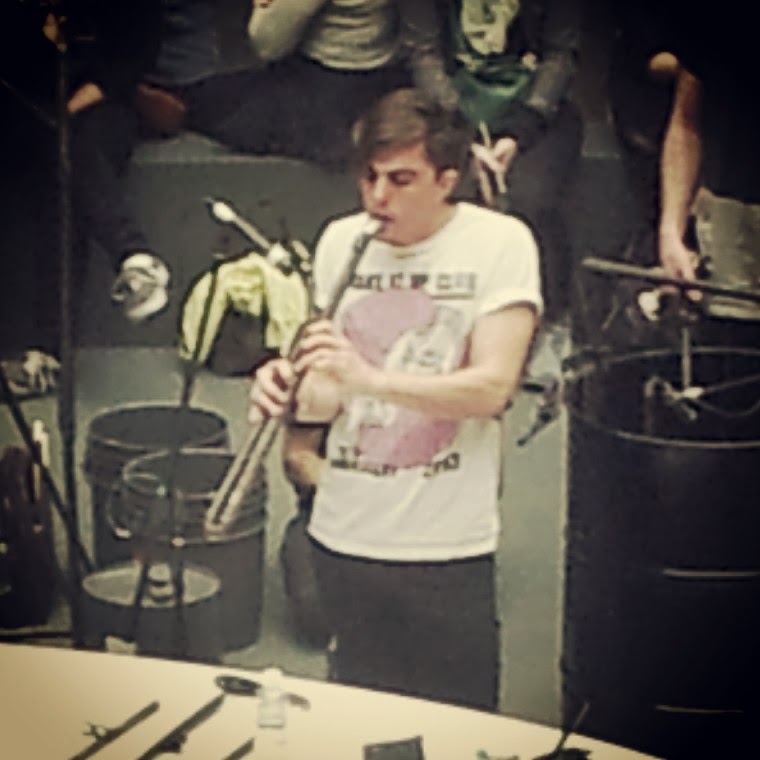
Last Sunday, Nicole and I stumbled upon a music performance at the National Gallery of Victoria conducted with instruments made from weapons - guns, magazines, a pith helmet... Kind of creepy, dark, and beautiful, all at once.

Brought to Melbourne as part of the Melbourne Festival, Disarm is an orchestra set made by Mexican artist Pedro Reyes.
The weapons are a collection confiscated by the Mexican government, and now make music.

The drum kit is made from all pistol pieces.

A saxophone made from the long barrel of a shotgun. The flute was a shotgun, too.

The guitars is fashioned from many ammunition magazines, and barrels of shotguns.

Last weekend Melbourne improv group Make It Up Club played with the collection of instruments for just over half an hour, to a packed space in the middle courtyard space. It was pretty impressive.

We actually went to the NGV for the Art Deco Fashion exhibit, which is really great and has just opened, but this show was a surprising bonus of the day.

Reyes has talked about making these instruments as a 'redemption of this metal' of weapons that have taken lives. Amazing.

Tuesday, May 21, 2013

Brave Women, Genetics And Genocide, and A Voice: HRAFF '13

The Human Rights Arts and Film Festival has been in Melbourne for the last week and a bit, and I managed to see two short films, two full length stories, and wander through the amazing photography exhibit that accompanying the Fest. The Festival soon tours the country, so these are the ones I saw, loved and was moved by:

Taxi Sister
The story of a female taxi driver in Dakar, Senegal. There are 15,000 taxis, and just 4 taxi sisters among them. The short follows one around over a couple of days, picking up customers, waiting for fares, chatting with other drivers, and just living every day, making her living.

She finds herself having the justify her place in her chosen role to her male colleagues, and explaining that she is alone, having to bring in the money for her family. She no longer had a husband, she explains to the inquiries about why she is not staying home taking care of a man, and that she should be able to work in whatever role she wanted. She's sassy and strong willed, and such an interesting character, showing the world that gender is not a barrier to doing something you want to do.

Red Wedding
250,000 women were forced into marriages during the Cambodian Khmer Rouge period. The political spin was that this was to increase the population, and the new desired workers who were left from the genocide phase were the basis of this new population. This short was one woman's story, of the rape and trauma of her experience, and the lack of understanding about what went on and why.

Incredibly brave, we follow as she shows us the rice paddy where she now works, in the village she lives in, which was once used as a killing field. She tells us the bits of her story she confidently knows, and then confronts members of her village who were part of the arranged marriages and the ruling party at the time, to get a better understanding of it all.

She finds a way to discuss what happened to her with her family, and starts a formal complaint process, in a quest to find some sort of closure, and to help other woman like her. I wonder how she will remain safe as her story is being told to the world through this short film, as she confronts her village leaders, and as she submits her request for a formal investigation. So brave.

Sun Kissed
The story of a Navajo family with two children with the very rare genetic condition called XP. Characterised by skin that burns very, very easily in sunlight, often before diagnosis, and then by the rapid and pervasive neurological degeneration. At the point of the movie, their son had recently passed away, and their daughter was profoundly disabled, requiring peg feeding, and with very limited independent movement.

Initially they thought that they were the only ones experiencing this trial, and the medicine man had told them that their children were like this because when he was young he tortured ants. They had also been told that having children with someone from the same clan would result in children with medical issues, such as their children. But soon, she found other families in the Reservation with children with the same condition, and they started piecing some information together. None of the families she found were parents of the same clan. Some of them, too, had been told that their acts of harming animals when they were kids were the reason for their children having this condition. The impact of religion and cultural beliefs was strong, and the stories carried.

XP is a condition with an incidence of 1 in a million; but here in this region, it was presenting in 1 in 30,000. A significant biological situation.

They manage to speak with a Geneticist and a Historian, and start to hear a connection between this elevated prevalence of this rare genetic disorder to the Long Walk. Essentially, in the late 1800s US military rounded up the Native Americans and kept them within a small geographical area, and initially confining them to a concentration camp of sorts. From here, their population diminished due to the conditions to 5000 people, and it is thought that this mixed clans, and in turn, through the conditions and deaths and pool of Native Americans in one place, confined the gene pool.

This clustering of the Native American clans has meant that the recessive genes are meeting in a match more often, and manifesting in such a rare disorder in this generation of children. Fascinating that it has taken this long to present itself, frightening that there is a sudden surge of incidences of this condition.

Their quest to seek information about how the Long Walk may have impacted took them some time, as no one in their community wanted to discuss it. The past, and bad things such as illnesses, are not discussed in Navajo culture, it was explained. He lamented that this, in turn, meant that so much of their own culture was being lost to them. They no longer spoke some of the languages, and now they were having trouble accessing their history.

Apart from the incredible grief felt for this little family and their loss, the film leaves you with the contemplation of the genetic impact of such atrocities as forced migration on populations, communities, and the future generations - the Long Walk, the rounding up of Indigenous children in Australia, Nazi Germany, the Khmer Rouge genocide....

Requiem
A photography exhibit on display in the Yarra Gallery off Fed Square - here is a room of images selected from the collection shot by the 135 journalists who were killed or went missing during the Indochina War in South East Asia. These prints were taken by Cambodian Nationals and Foreign Press photographers in the battles and weeks before the KR took full command. Some powerful images captured - moment of history - all quashed by the ruling dictatorship/

Words Of Witness
We follow the work and passion of 22 year old budding journalist, Heba Afify, during the Egyptian uprising in Cario in January of 2011. She battles her Mum for permission to be out and interviewing people protesting, and teaches her family about the political situation of the overthrow of Mubarak, whilst she writes and publishes stories and updates for an English news site, and her Twitter and Facebook accounts.

As a young women she faces many barriers, including the perceptions from her own family, about what she should and should not be exposed to, all the while, displaying her passion and excitement for a new political era in her own country.

Tuesday, February 19, 2013

The Death Railway And Hellfire Pass

Riding the railway from Kanchanaburi to Nam Tok, as far as the rail goes now, is a sombering experience. I love travelling on a train, but everytime I felt myself get carried away with the clack of the tracks and the gentle rocking of the rickety carriage, I reminded myself of the sacrifices made to lay these very tracks down.

The train rolls across the bridge over Mae Klong River - made into the River Kwai by Hollywood and the movie of the same name, and then heads away from town through the countryside.

It soon glides over a Viaduct, on the edge of a mountain, and the wonder of how these POWs built this section returns.

They say that for every railway sleeper on this track, there was a POW death on the construction process.

We rode the train for 2 hours, before disembarking and then getting a driver to take us to the section referred to as Hellfire Pass, 18 kms away. The Museum here is managed by the Australian Department of Veteran Affairs, Office of War Graves, and it very well done. After walking through the rooms of information, we walked the paths to get down to the cutting that the Aussies named after the vision of themselves in the lighting in the cutting as they were forced to work long into the night, starved and emaciated, resembling scenes from hell.


The cutting is 25 metres deep at it's highest point, and was cut with the most rudimentary tools. Without even considering the state of the men forced to complete such work, this feat is incredible.

This is also the place where Sir 'Weary' Dunlop's ashes were spread, as a plaque reminded me as we got down to the track level of the pass.

Such an important part of Australian and Aussie Digger history, in addition to the other Allied and Asian labourers lost in this piece of WWII. A very important place to visit, and learn about.


Getting back to Kanchanaburi, Dave and I had our driver drop us back at the Bridge, and we had a very late lunch at one of the floating restaurants so we could take in the sunset colours highlighting the view. We even caught sight of a train crossing over, scattering the hordes of tourists getting their movie photos.

Monday, February 18, 2013

Remembering The Fallen In Kanchanaburi

Dave and I travelled up to Kanchanaburi by bus from Bangkok, and after settling on a guesthouse on the river's edge, we set off to take in the significance of this Thai town.  I think it took me the whole visit to get to a point where I said the town's name properly!

Firstly, we went through the Death Railway Museum, which gave us a good overview of what went on here and on the construction of the railway line all the way across the border to Burma. Part of the Japanese World War II campaign to open up a way of getting supplies through, 60,000 Allied Prisoners of War and 180,000 Asian labourers were enslaved to build the line under the most hideous of conditions.

Across the road is the Kanchanaburi War Cemetery, where 2,815 Australian POWs who lost their lives during the construction have been laid to rest. 6,318 English POWs' graves occupy half of this cemetery, whilst the remaining plots are Dutch, New Zealander and Canadian, with many simply marked "An Allied Soldier". The US actually suffered the highest of the Allied POW losses, however their soldiers were repatriated for burial after the Japanese surrender.

Walking through the rows of Aussies, it was as moving as that experience at Anzac Cove, with so many lads around my age, killed in such unimaginable circumstances.

Many headstones held messages from family at home, and listed where the men were from. I spotted one woman buried here too, a volunteer within the medical unit. So many deaths were due to sickness, starvation, and also the brutality during the "Speedo" phase of construction, when the Japanese started to panic about their timelines for the completion of the railway, and things became more brutal.

So senseless. The world never seems to learn about the pointlessness of war.

Monday, October 29, 2012

The Australian War Memorial

Friday night in Canberra I finally got to visit the Australian War Memorial, a place I have been very keen to see for many years.  Our Welcome function was held here for the Human Brochure weekend, and we got a glimpse into this iconic and very moving site to honour those who have served and been lost in war for Australia.

We arrived as the sun was out, and the moon featured above the sandstone building.  From the front steps, we could see the roads leading to Parliament House, and to the side a statue to remind us of the Samson and his Donkey story from Gallipoli.

Our groups gathered and took in the building, before being invited inside.  We were able to explore the commemorative courtyard, take in the mass of names and poppies along the Roll of Honour, and also experience the Hall of Memory.


Such a beautiful place, with the reflecting pool taking in the balconies above.  Walking along the Wall of Honour, the sheer number of names was incomprehensible, and was a solemn mark of remembrance for all battles Australian soldiers have been been involved in and lost their lives.

At the end of the commemorative courtyard was the stunning Hall of Memory, with the Tomb of the Unknown Australian Solider, representing all who have given their lives for our nation.

The Hall features stained glass windows, and mosaic pieces, each with significant wartime significance to the our servicemen and women.

Our evening featured welcomes from the Memorial, and the Australian Capital Tourism who had brought us all here to see what Canberra has to offer visitors.

We were then invited to walk through the Orientation Gallery, out into the Aircraft Hall.  It was clear there was so much to access on a normal visit to the Memorial, and this wander was a taste of the rich volume of wartime history collected here in the one place.

The Aircraft Hall featured many of the planes used in the World War I conflict, which was just mind-boggling to see, given the standards of plane travel today.

Here, we were treated to a film produced by Peter Jackson, and then offered talks of the various features of this area of the Memorial.

Seeing just a portion of the Memorial like this just affirmed my long held desire to be here for an ANZAC Day Dawn Service.

It has also made me realise that I will need to allow plenty of time to take it all in properly, because there is so much to take in, and so many sections to visit to get the full wartime history on display.


This post is part of the #humanbrochure weekend to showcase Canberra as a destination, which I attended as a Plus One, with Carly Findlay.  We were part of the Food and Wine Stream, in the Australian Capital Territory Tourism initiative. 

Monday, July 30, 2012

Americas Wars Memoralised

Along the Mall in Washington DC is not only the iconic monuments that the world is pretty familiar with, but each of America's past wars also have a space of remembrance - each pretty impressive in their own right.

The first as you walk towards Lincoln from the Washington Monument, is the World War II Memorial. This oval water feature is surrounded by columns representing each US state, and the Pacific and Atlantic efforts. This memorial also features the Freedom Wall, which 4049 gold stars and has the marking "the price of freedom", each star representative of 10 American lives lost or missing during this battle.

The Vietnam Veterans Memorial is on the North side of the site of the Reflecting Pool, and stands as black granite with about 58000 names of the men and women fallen to this war, also with a little cross next to the names missing in action.

The names listed across the two sides of the wall are done some in chronological order, and marks the vast waste of life. The design of the memorial is aimed to give no political statement about this battle, but the sheer size and volume of names speaks for itself.

It brought to mind that speech former Australian Prime Minister gave at the Gallipoli Dawn Service in 2005, about how war not only robs the world of these people who have died, but also of their potential. Their feats at home, maybe academically, scientifically and within humanitarian achievements, their potential loves and children leading to future generations, all lost because of war.

On the South side of the Reflecting Pool is the Korean War Veterans Memorial, and is the most eeriest and surreal monument. It is a section of garden, with statues placed through it decked in true equipment as they would have been during this era, and a wall showing faces etches from actual photos from the National Archives of the personnel of this war.

There are 19 soldiers here, representing a ratio of ethnic cross section of the numbers lost in this battle. The men are staggered in formation, and yet quite alone in each one's stalking of the jungle - it's such a real sense of what it may have been like to be on patrol like this. So powerful.

So many of these sites include words from great beings at the time, talking of protecting freedoms and human rights, and upholding justice and world peace. It's really quite sad taking these in, when considering the state of the world at the moment.

The most powerful wording for me was found at the FDR Memorial near by, etched on these stones:

Thursday, July 26, 2012

Arlington Cemetery


A visit to Arlington Cemetery in Washington DC, technically in the state of Virginia, is worth the cross over to the other side of the river, to complete your visit and understanding of US history and military significance. It is also a stark reminder of the sheer numbers of lives lost at war.

This cemetery of rolling hills, lush green spaces and well kept gardens is the National Military Cemetery, and reportedly holds around 100 funerals every week. Veterans and their partners and children can be buried here, alongside their fellow US service men and woman. As such, the range of dates along the sections and along the rows include the full range from war dates, to present day passings.

There are sections for higher ranked personnel, but in the end the honoured here are really equal in their sacrifice, whether as the serving member or indeed their supporting spouse at home.

Of course, among others, Arlington is the final resting place of many of the Kennedy's, including JFK. The eternal flame above the plaque for the assassinated President, and his wife Jackie O, pulls the biggest tourist crowd, playing their respects and remembering his contribution to American way of life.

The most beautiful part of the cemetery visit for me, however, was the reflecting arches of the Women In Military Service for America Memorial, just at the gates before we left to walk the bridge back to The Mall.

Tuesday, July 24, 2012

Iconic Monuments of Washington's Mall

Taking in the sights of The National Mall in Washington DC could well take you weeks, if you explored all the amazing museums in addition to taking in the iconic sights. Over two afternoons this weekend, I managed to see all the outside sights along this massive space along the river in the US capital, and take in so much American history along the way.

Selena and I started by arriving at the back end of The White House from the metro, and peered into the green, manicured lawns through the gated fence. The residence of the President of the 'the home of the brave, and the land of the free' was pretty impressive with it's white marble, and it's strong columns, before walking around to the other side and taking in that iconic lawn and larger columns known from all the news footage and movies!


After gaining a good perspective of the lay out of this important area of town, and indeed the country, from the Old Post Office (which is a whole other post, cos it was pretty impressive!), we walked down to the great lush strip of green that runs from Capitol Hill all the way down to Lincoln in his massive seat.

The Washington Monument is in the centre of this, and rises above everything. Flags rimming the monument were at half mast this weekend, we assume for the horrible tragic shooting massacre in Colorado.

Normally, you can take a trip to the top of the monument for the view from the windows in the peak, however since the earthquake last August this has been closed due to structural fears and repair work. Although I think the view from the monument would be missing the very vantage point you would be looking out from, and thus a major sight of the area.

The east arm of the Mall has museums all the way along it, including the beautiful Smithsonian Castle. The National Gallery, the Air and Space Museum, the National History Museum, the American History Museum, and the American Indian Museum are also hear, and given their size and vast content, a day's outing each of their own, surely!


Walking west on our overcast day, Selena and I took in the war memorials along this arm of The Mall (again, a post for later), and used our imaginations for the beauty of the Reflecting Pool. This pond is also undergoing restorative work, a massive tasks, and this space was dry and empty. The Pool is an iconic piece of this space, from protests, marches and speeches - Martin Luther King Jr's "I Have A Dream" being one of them, delivered to the crowd around this water feature.

This stretch of water leads right up to the Lincoln Memorial, another famous and iconic feature of this strip in DC.

As you get closer to the massive rectangular house for the fourth president of the USA, you can see him in there, seated in his white marble glory. This structure of columns is such a strong monument, and to find the statue of the man sitting in there after climbing the stairs is quite remarkable. A sight you know about from pictures, but is still amazing to be standing at Ab's feet!

A mass of people were here when we got here, as there was all along The Mall, as Americans visited their forefathers, and visitors alike took in the monuments that make up this world power nation.


All the way to the other end of The Mall is another working building, being the United States Congress. We reached this on the second afternoon, completing our lap of the Mall sights. Managing most of this on foot, getting around on bicycles would have been a great option, if it was not for the rain on the first afternoon for this less than confident rider!

This grand, white marble structure is impressive and pretty in real life, with the manicured and perfect gardens all around, and the exquisite detail in and around the dome.

Related Posts Plugin for WordPress, Blogger...